
Most fire and EMS agencies have a peer support program. Far fewer have one that actually reaches people when it matters. The model most agencies inherited is reactive by default: a firefighter or medic hits a wall, remembers there's a peer support number somewhere, and maybe — maybe — makes the call. For a population that has spent an entire career being trained not to show weakness, that's a shaky foundation to build anything on.
That's the design flaw most peer support programs never talk about.
Wellness coordinators know this. You've seen the utilization numbers. You've done the math on critical incidents versus formal peer contacts. The gap is not small.
The "build it and they will come" problem
The assumption behind most reactive peer support models is that awareness equals access. If people know the resource exists, they'll use it when they need it.
That assumption collapses under the weight of first responder culture.
Stoicism isn't a personality quirk — it's a survival mechanism that gets reinforced every shift. The medic who admits they're struggling risks being seen as a liability. The firefighter who reaches out for help worries it'll follow them into their next performance review. The culture says: handle it. Walk it off. Get back on the rig.
No poster changes that. No number on a lanyard changes that.
What changes it is a peer who already has a relationship reaching out before a crisis — not because something went wrong, but because that's just how the program operates. Consistent. Normalized. Expected.
That's proactive outreach. And without the infrastructure to support it, even the best-trained peer supporters end up underutilized.
What "infrastructure" actually means
This is where it gets operational.
Proactive outreach isn't just telling your peers to check in more. That approach burns out your best people fast and produces inconsistent results across shifts, stations, and divisions. What it requires is a structured system — one that tracks who's reaching out to whom, when contact was made, what follow-up is needed, and how to escalate without violating confidentiality.
Without that backbone, you're relying entirely on individual peer supporters to self-organize across a department that might span multiple stations, shifts, and even agencies. Some will be excellent at it. Some will drop the ball — not because they don't care, but because there's no system holding any of it together.
For multi-agency networks, this problem compounds. Who coordinates across departments? How does a mutual aid partner agency share de-identified utilization data to identify gaps? How does credentialing get tracked when peers move between roles or agencies?
These aren't abstract questions. They're the operational realities that determine whether a peer support program actually reaches people or just exists on paper.
The contacts that never happen
Here's what the utilization data doesn't capture: the contacts that never happened.
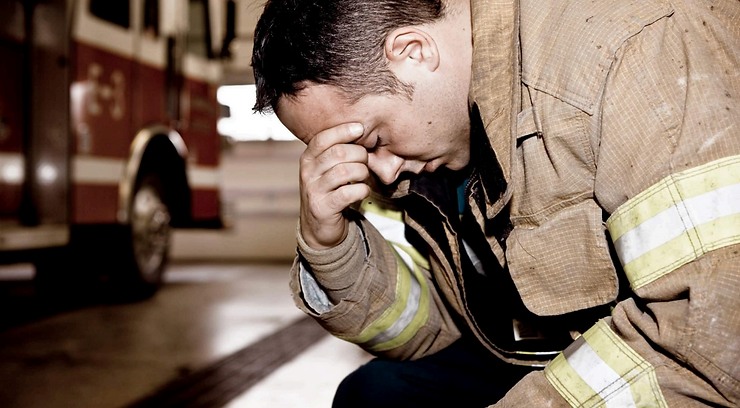
The engineer who came back from a pediatric fatality call and went quiet for three weeks. The medic who stopped sleeping but never told anyone. The firefighter who rotated off a line crew and fell out of the informal support network they'd had without realizing it.
Reactive programs don't catch these people. By design, they can't — because they're waiting for a door to open that first responder culture often holds shut.
When peers are systematically reaching out across their networks on a regular cadence — not just post-incident, but as standard practice — those quiet periods get noticed earlier.
The engineer gets a call not because someone flagged a crisis, but because that's when their assigned peer checks in. It's not clinical. It's not forced. It's peer-to-peer contact that feels like a normal part of how the department operates.
That normalization is the point. When outreach is consistent, the stigma of "needing help" gets replaced by the simple reality of "this is just what we do here."
What coordinators are up against
None of this is lost on fire/EMS wellness coordinators. You're often running these programs alongside a full operational role, with limited budget, minimal administrative support, and a senior leadership culture that still views peer support as a soft add-on rather than a retention and readiness tool.
Building proactive outreach infrastructure from scratch — tracking contacts, managing peer assignments, coordinating across shifts, maintaining de-identified records — can feel like a second full-time job.
It doesn't have to be. The right peer support network platform handles the operational backbone — so coordinators can focus on the work that actually requires a human, which is the peer relationships themselves.
The programs that are actually working
The peer support programs with strong utilization rates share a common thread: they don't leave outreach to chance. Proactive contact is built into the program design, tracked systematically, and treated as a core function — not a bonus feature.
That requires infrastructure. It requires a platform built for how first responder agencies actually operate, not a consumer wellness app retrofitted to look like one.
Your peers are ready to do the work. Give them a system that makes the work sustainable.
Frequently asked questions
What is a peer support program for first responders?
A peer support program connects firefighters, paramedics, and other first responders with trained colleagues — peers — who can provide emotional support, check-ins, and referrals to professional resources. Unlike clinical services, peer support is person-to-person and designed to meet first responders where they are, without the stigma attached to formal mental health care.
Why do so many peer support programs have low utilization?
Most peer support programs are built as reactive systems — they wait for a first responder to self-identify a need and reach out. In a culture where asking for help is seen as weakness, that barrier is often too high. Low utilization is rarely a training problem or an awareness problem. It's a design problem.
What is proactive peer outreach?
Proactive peer outreach means peer supporters reach out to their colleagues on a regular, structured cadence — not just after a critical incident, but as standard practice. Rather than waiting for someone to ask for help, the program builds contact into normal operations. This normalizes support, catches struggling personnel earlier, and reduces the stigma of "needing help."
What does a peer support coordinator do?
A peer support coordinator oversees the day-to-day operation of a department's peer support program — managing peer assignments, tracking outreach activity, coordinating across shifts and stations, maintaining confidential records, and escalating when needed. In many agencies, this role sits alongside full operational duties with little dedicated administrative support.
How do you measure peer support program effectiveness?
Effective peer support programs track both reactive contacts (calls made after incidents) and proactive contacts (scheduled check-ins). De-identified utilization data across shifts, stations, and time periods helps coordinators identify gaps — who isn't being reached, which stations have low contact rates, and where peer capacity may be stretched.
What should a peer support platform include for fire and EMS agencies?
A peer support platform built for fire and EMS should include structured outreach tracking, de-identified reporting, multi-agency coordination tools, and credentialing management. Consumer wellness apps and generic HR platforms typically lack the confidentiality controls and operational structure that fire and EMS peer programs require.
See how Siento supports proactive outreach
Structured outreach tracking, de-identified reporting, cross-agency coordination, and credentialing — built for fire and EMS agencies, not adapted from consumer apps.
Respond · Support · Sustain